
🎧 Listen to today’s story
📚 Key Words
| Word | Meaning | 中文 |
|---|---|---|
| scientist | A person who studies how the world works. | 科学家 |
| insect | A small animal with six legs, like a bee. | 昆虫 |
| radar | A machine that uses waves to find things in the sky. | 雷达 |
| information | Facts or news about something. | 信息 |
| difference | The way in which two things are not the same. | 区别 |
| trillion | A very, very large number (1,000,000,000,000). | 万亿 |
| planet | A large round object in space, like Earth. | 行星 |
| protect | To keep someone or something safe. | 保护 |
📖 Read the story
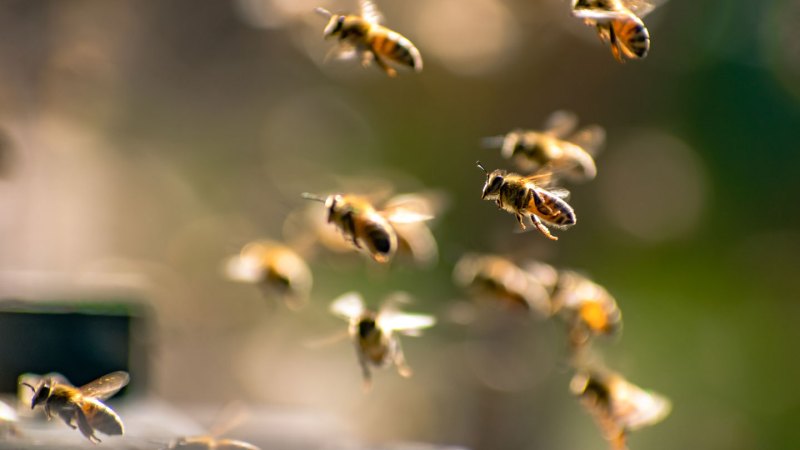
Did you know that many animals live in the sky? Insects like butterflies and bees travel high above us. Scientists want to know how many insects are in the air. They used a special tool called radar. Usually, radar finds rain or snow. It sends out radio waves. When these waves hit something, they come back. Rain drops are round, but insects are long. This helps the radar see the difference. Scientists looked at ten years of information from the USA. They found a very big number. On a summer day, there are about one hundred trillion insects in the sky! This is a number with fourteen zeros. These insects are very important for our planet. Some fly far away to find new homes. Others look for food in the air. There is a whole world above our heads. It is important to protect these small animals.
✏️ Answer the questions
1. What tool did the scientists use to count insects?
- A.A camera
- B.A radar
- C.A plane
- D.A phone
2. What does radar usually look for?
- A.Birds and cats
- B.Trees and flowers
- C.Rain and snow
- D.Sun and moon
3. How does the radar tell the difference between rain and insects?
- A.By their colors
- B.By their sounds
- C.By their speed
- D.By their shapes
4. How many insects are in the sky on a summer day?
- A.One hundred
- B.One thousand
- C.One hundred trillion
- D.One million
5. Why should we protect insects?
- A.Because they are very large
- B.Because they help our planet
- C.Because they can fly fast
- D.Because they live in houses