
🎧 Listen to today’s story
📚 Key Words
| Word | Meaning | 中文 |
|---|---|---|
| scientists | People who study how things work. | 科学家 |
| brain | The part inside your head that thinks. | 大脑 |
| interesting | Something that gets your attention. | 有趣的 |
| symbols | Signs that represent numbers or ideas. | 符号 |
| mistakes | Things that are not correct or wrong. | 错误 |
| dots | Small round marks. | 点 |
| understand | To know what something means. | 理解 |
| difficult | Something that is hard to do. | 困难的 |
📖 Read the story
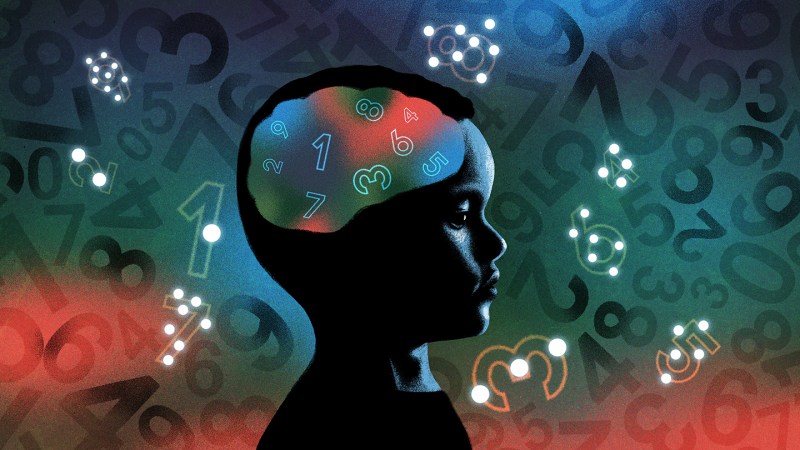
Scientists wanted to know why some children find math difficult. They studied how children’s brains work during math class. They found a very interesting thing. Some kids have a hard time with number symbols. Symbols are the signs for numbers, like 5 or 8. When these children see number symbols, they work too fast. This makes them make more mistakes. But then the scientists showed the numbers as dots instead of symbols. Everything changed! The children worked more slowly and got more correct answers. This study shows that their brains are not bad at math. They just find number symbols hard to understand. This information helps teachers find better ways to teach. Learning with pictures or dots can make math easier for many students. It is a great new way to help children learn. Math can be fun if we learn it in the right way.
✏️ Answer the questions
1. What did the scientists study?
- A.How children play games
- B.How children’s brains work in math
- C.Why children like art
- D.The history of numbers
2. What are symbols according to the text?
- A.Pictures of animals
- B.The dots on a page
- C.Signs for numbers like 5 or 8
- D.Books for teachers
3. Why did some children make mistakes with symbols?
- A.They worked too fast
- B.They were very tired
- C.The room was too loud
- D.They did not like the teacher
4. What helped the children do better in math?
- A.Using bigger symbols
- B.Listening to music
- C.Looking at dots instead of symbols
- D.Working faster
5. Who can use this information to help students?
- A.Only doctors
- B.Teachers
- C.Scientists only
- D.No one